Showing posts sorted by date for query where are you. Sort by relevance Show all posts

Jazz Portraits - Mingus In Wonderland

Mingus in WonderlandOne of my favorite albums, Mingus In Wonderland eschews his typical big band arrangements and instrumentation for a pared-down quintet. Recorded live at the Nonagon Gallery (NYC) in 1959, this set has a comfortable intimacy - turn it up loud enough, close your eyes, and you could almost be there. While it's not clear whether the tunes on this CD are presented in the order they were performed, the opener Nostaglia in Times Square is just the kind of tune I'd pick for a warm up - and has a bit of that feeling to it, as the group eases into the tune, sounding more sure-footed and assertive as the piece unfolds. In part, opening solo may be responsible for this, coming off as more of a limbering up on assorted Parkerisms, blues and bop cliches more than anything else. In any case, he further establishes the easygoing, swinging mood of the piece, sounding relatively laid back even on the double-timed choruses. This is followed by an extremely perfunctory solo from (a last minute sub for Mingus' regular on the piano bench, ) on piano, after which steps in and things start getting down to it.

Ervin's stark tone and unique tonality are instantly recognizable, and serve to heat things up a bit. Booker launches into his double-time choruses with more abandon: seizing the first bars to unleash one of his cascading, descending dimished runs that his solo has been building towards. The beat sounds like its finally caught up with him, making for a great release of the tension his angular solo has created. As usual, Booker also makes masterful use of his slightly pitchy (micro tonal) inflections throughout - a device that (another Mingus hornman) was also adept at using to great effect. Few bassists can follow a horn solo like Mingus: With no loss of energy, momentum or melodic invention. He enters with a signature boppish run, and only gradually allows the tension to dissipate as his solo winds down into trading fours with . This exchange rapidly becomes more conversational in nature (in the vein of Mingus' subsequent mid-Sixties "freer" or "spoken" explorations with Dolphy). This duet gets pretty out (especially for '59) before the band reprises the head at the end. At least as "free" as anything recording at the time...

Handy really shines on his lyrical interpretation of Can't Get Started, the second tune (and only standard, non-Mingus original) on this CD. Handy eloquently interjects his bop phraseology into his interpretation of the melody, actually keeping the melody close at hand throughout his solo, seeming to wring damn near every once of drama and beauty out of it as he goes (similar to a Johnny Hodges read of a tune - or Charles McPherson on Mingus' Celia...). Whether it was planned or not, the sparing contributions of Wyands' piano (and the complete absense of Ervin) make this piece stand out in terms of orchestration. (This may be attributable to what certainly sounds like a somewhat clumsy and non-musical edit between the sax and bass solos - unfortunately something crops up all too often in Mingus recordings). Nonetheless, Mingus' solo also is seeded with some deftly-placed references back to the melody. After Handy swoops back in back in with a great reprise of the theme (including a brief, shimmering flight into the upper register) Dannie pulls back and then drops out completely, leaving Handy and Mingus to duet together on a bit of a cadenza to close out the tune. The song's title notwithstanding, it seems like the group has gotten started by this point on the CD.

My personal favorite of the set is No Private Income Blues - perhaps I just wish I'd come up with the title myself, or maybe it's just that the tune lights right in with a Mingus solo for a chorus, with Ervin surging in in his wake - no statement of a recognizable theme, just blowing... This medium uptempo is where Ervin can really hunker down and wail, peppering his solo with his convoluted, chromatic patterns and slightly bent, sustained cries. The rhythm section essentially drops out, punctuating his solo with several true solo choruses accompanied only by terse utterances and exclamations by Mingus and Richmond in the background. Wyands' solo is again economic, but serves as a good transition into Handy's boppish choruses that follow. He stretches out a bit more here after several choruses, again venturing into the upper harmonics for some bent notes , Mingus and Richmond again backing off and surging back in, mounting the tension as Handy's choruses progress. Mingus starts laying down some of his signature pedal tones towards the final choruses which give way into several solo choruses by Richmond. It's after this that real highlight Income arrives: a smoldering series of fours traded between the two sax men. Perhaps not quite on a par with Trane and swapping back and forth on Two Base Hit on Milestones, Ervin and Handy have a great interplay here. The fours eventually become ones (sounding at times much like Trane's yet-to-come fragments of a few years later), with the two ultimately end up just straight out blowing simultaneously (with Mingus occasionally chiming in with some singing). Throughout this entire smokin' exchange, the rhythm section continues to periodically drop out, only adding to the overall energy when they come back in.

Alice's Wonderland is definitely the showpiece composition of the set - and a surprising big and lush-sounding arrangement to coax out of a quintet. As on Can't Get Started, Handy leads off with another very appropriate solo, resplendent in its lyrical qualities and melodic relevance. Mingus' solo follows this up in a similar vein with a relatively succinct solo that ushers in a a return of the melody. Wonderland ends with a group trill that transforms into a wash if trills and siren-like wails that bring to mind Varese's Ionisation - another taste of the breadth of Mingus' conception, which even in 1959 spanned everything from orchestrations to sounds one would expect to hear on a mid-60's date...

Jazz Portraits - Mingus In Wonderland (United Artists UAJ 14005)
"Nonagon Art Gallery", NYC
January 16, 1959

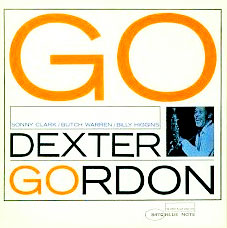
Go - Dexter Gordon

Go - Dexter Gordon
Right from and ' entrance over descending bass line on Cheese Cake, this album lives up to its name, and goes. Dexter wades right into his solo with a self-assured and confidence that leaves no question that this is going to be smokin set. His tone is expansive and majestic throughout - follows with a brief, terse and somewhat restrained post-boppish, post- solo before comes sailing back in for a few choruses, keeping the energy of the piece intact. It's easy to hear from the broad, rich tone plays with why is considered one of influences - check out the higher register wails works in.

The ballad that follows - I Guess I'll Hang My Tears Out To Dry - again seems reminiscent of . Like Soul Eyes, (perhaps somewhat inexplicably for myself - and myself alone) it vividly conjures up the image/sensation of a late night cab ride in NYC - say, speeding uptown on Lexington in the pouring rain on one of those first fall nights, when that first chill cuts through the damp air, yet the insular environs of that cab's back seat hold the cold at bay, and the city streams by serenely in a watery blur of bending light and shadow... Such obtuse imagery and metaphor aside, rich tone overflows from this tune, drawing the listener in, immersing you in a curious ennui...

The more rollicking Second Balcony Jump changes the pace to more of a straight-up, joyous blowing session. nimbly timekeeping keeps a slightly loose pulse - creating an infectious swing on this tune. draws us into the groove further with the latin intro on Love For Sale. Dexter's statement of the melody - and his soaring, caterwauling, singing solo that follow conspire to make this perhaps my favorite recording of this piece. sounds at once majestic and sarcastic: injecting wry turns of phrase into lines that evoke a sense of grandeur that transcends the tune itself. His mariachi-esque entrance after solo soon gives way to brilliant ascending arpeggios nearly spanning the range of the horn, replete with fat, bulbous low register honks (again bringing to mind playing of this period) to keening, almost vocal upper-register wails.

Where Are You brings me back to those autumnal, rain-slicked city streets, with Dexter again conjuring a sense of a kind of regal loneliness - that incomparable realization of aloneness that the city can evoke at times...

Announcing its arrival with a quote from ' classic If I Were A Bell, Three In The Morning is another mid tempo number that shines on: Asserting his cool, confident mastery of the instrument and the idiom. As described Dexter's style of dress - "cleaner than a broke-dick dog" - this tune (an otherwise typical, forgettable hard-bop vehicle) is transformed at Gordon's hands into something with much more class - again, transcendent. One only need listen to Clarke's perfectly adroit and idiomatic solo in contrast to Gordon's playing, and Dexter's greatness is evident. Once more, Gordon enters after Sonny's solo with a tongue-in-cheek quote from Take Me Out To The Ballgame - almost trivializing Clarke's solo. Not to undermine Sonny - he's one of my favorite pianists of this period and style - just that the clarity of Dexter's inspiration on this date is in such a league of its own, rather overshadowing the playing of the rest of the band. From the perspective of being "Dexter's band," however, their performance is stellar all around. Completely supportive as a rhythm section, they lay down an infallible groove throughout, and deliver a few more modest solos that set off Gordon's work as all the more dazzling - solos that in other contexts that in their own right are nothing to be scoffed at.

What's important here, is that Go! is clearly a Dexter Gordon album - a wonderful documentation of a man playing at the height of his powers. Go! is definitely one that should be on the short list for any fan of hard-bop, 60s jazz - or for that matter, anybody with ears.

Go! (Blue Note - BLP 4112)
Rudy Van Gelder Studio, Englewood Cliffs, NJ
August 27, 1962

The Bridge - Sonny Rollins

The Bridge - Sonny Rollins
"Take me to the bridge!" - James Brown

The hardest working man in show business knew where it was at (in more ways than one). The Bridge, ' landmark "comeback" album after his self-imposed exile, is the album I'd put at the top of my indispensable list for Sonny<. From the opening bars of Without A Song you know you're in for a treat: Sonny's expansive and rich tone - tasteful, minimalist entrance - Ben Riley's dancing brushwork and Bob Cranshaw's loping bass all set a cool, comfortable tone for the masterful record that follows. Rollins takes a brief yet elegant cadenza after Hall's solo that leads perfectly back into the theme. Hall's solo itself builds nicely from concise single note statements to wonderfully constructed chord solo that shows that he's a player to be reckoned with, with overstating the point. The kind of playing that makes The Bridge the essential Jim Hall album for me as well.

Where Are You
and God Bless the Child are classic Rollins ballads - brimming with the full, liquid, singing tone that came to characterize such works of Sonny's in the 60s. In Where Are You, Rollins glides in after the guitar solo for a gorgeous legato duet with Hall that leads us gracefully back to the melody, with the rhythm section rejoining. Again (as in Without A Song) Sonny manages to keep the melody ever-present and close at hand during his somewhat sparing solo - a solo that's not lacking, but just enough. God Bless the Child is tailor-made for Rollins - his interpretation of this tune here is perhaps the only one that rivals the ennui of Billie Holiday's version. Once more, he makes very effective use of legato duet passages with Hall - keeping a slow tempo completely engaging with astute orchestral choices and lines steeped in the melody of the tune.

The intriguing fragmented line of John S. perfectly sets the stage for Sonny's subsequent solo. He and the band brilliantly build up the momentum during this solo - which starts from a germ of an idea in Rollins' opening phrases/motifs - a solo that creates the sensation that the tempo is accelerating throughout, as Rollins slowly and deftly builds the energy without ever sounding the slightest bit strained.

The effortlessness continues as Rollins rips into The Bridge - the album's uptempo number. The head and early solo choruses are punctuated with lapses into three which Sonny uses the explore a descending, cascading motif that creates wonderful opportunities to create and release tension, contrasting with the simmering uptempo 4/4 portions of the tune. Rollins exploits these opportunities well, closing his solo out with a return to this motif - as in God Bless the Child Rollins' affinity for the melody underlies his entire solo, and pervades the whole piece.

You Do Something To Me returns to the cool, in-the-pocket loping groove of the opener, reinforcing the sense of an effortlessly intense performance that characterizes this whole record. Having been introduced to Sonny Rollins through his Village Vanguard recordings, I tend to see any other Sonny recordings through the lens of that album. The Vanguard sets have a different, more obvious kind of energy - a more palpable, visceral feel - as do most records with Elvin Jones (not that Wilbur Ware doesn't contribute to this, as well). What's interesting about The Bridge is the superficially calm nature of the music, music that's simmering with intensity, energy and creativity. Turn it up a bit, it's just as smokin' as the Vanguard, just in it's own more quiet way.

The Bridge (RCA Victor LPM 2527)
January 30 & February 13 & 14, 1962


A full take of the quartet smokin' though the title cut on Jazz Casual (check the interplay between Rollins & Hall after the drum solo):


More on "the Bridge" period - some words from Sonny himself, and footage of the quartet burnin' it up:

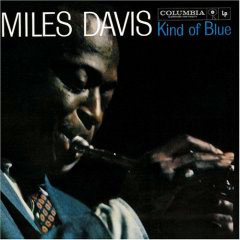
Kind of Blue - Miles Davis

Kind of Blue - Miles Davis
How many times have we been subjected to remake after unmemorable remake of the tunes on Kind of Blue? Most readings of these songs are largely forgettable, especially when held up alongside the originals - seems Miles and his subsequent groups were the only ones that consistently did these pieces justice. This said, it goes without saying that this album was, still is and will always be an indispensable cornerstone of any jazz collection - one of those records I'd venture to say "If you could only have one jazz CD, make sure it's..."

What really makes it hold up as a timeless classic is the all-around stellar playing of the group, no doubt in part inspired by Miles' selection of material: His "introduction" of modal harmonic structures in these pieces, and the fresh ideas the material elicited in the quintet's playing. The most oft-cited piece in this regard is the (in)famous So What, for obvious reasons. We all know this became a Trane standard as Impressions - and a blazing uptempo romp for the 60s Miles quintets - and was recycled as a number of other tunes by other groups. So What is one of the quintessential tunes in every aspiring jazz player's book (required reading for Jazz 101, that only gets more enigmatic and challenging for PhD's - hence the myriad half-assed versions of this song that have been recorded and played of the years).

Interestingly, it's always struck me that the other really "modal" piece on the record is largely overlooked and underplayed (though that may be a blessing in disguise). To me, Flamenco Sketches allows the group to stretch out even more and really immerse themselves in modal improvisations. The solos are a bit more raw and vulnerable - without as steady a pulse, momentum is generated more by the line of the soloist's melody that the rhythm section - there's a uncommonly delicate, fragile beauty to both Miles and Coltrane's solos. While so much 60s Trane has been traced back to So What, in Flamenco Sketches I hear early strains of that more elusive, haunting quality that reappears later in Expression and pieces like Wise One, Crescent, Meditations, etc.

Cannonball's playing on Flamenco is equally intriguing - imbued with a ecstatic yet poignant drive, it almost captures the joyous energy of his later Live at The Club classics, but in the more subdued context of this recording. Evans seems in his element here - if anyone's later work can be traced back to anything on Kind of Blue, the moods and colors Evans creates on Sketches seem most evocative of the shape of things to come...

Of course, I'm as guilty as the next guy with regards to having committed countless crimes in the name of So What - dunno how many times I've played it, but do know of only a few where I've even come close to really playing it. A recent listen to Kind of Blue rekindled my interest in Flamenco Sketches, and have been delightedly working on the tune ever since. Best part is: Flamenco feels fresh. Every time I play through it, the tune's full of new possibilities and surprises. Maybe that's more of how the group was hearing things back in '59. Whatever the case, the sextet's version still sounds fresh as ever - and I have renewed faith that these songs are far from played out. Avante-garde is more a state of mind, not a sound at a particular place in time...

Kind of Blue (Columbia CL 1355)
March 2 & April 6, 1959
Columbia 30th Street Studios, NYC