Showing posts sorted by date for query without a song. Sort by relevance Show all posts

Inception - McCoy Tyner
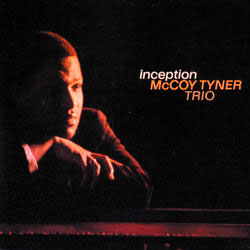
Inception - McCoy Tyner
From the first solo chorus McCoy rips into on the title track Inception, it's clear that this record will be a tour de force by a pianist at the height of his powers. Building up to the fours exchanges with Elvin (lead into by a subtly polytonal ascending chordal line), McCoy unwinds an increasingly intricate series of lines, showcasing his technical prowess and harmonic insight.

There is No Greater Love features some great interplay with bassist in the melody, as Art alternates between a cleverly staggered/delayed statement of the line that resolves to a unison with McCoy. McCoy's solo on this piece is less modal than that of Inception - he exploits the changes more, while still retaining the flavor of his work with concurrent to this record. delivers masterful brushwork throughout - allowing Tyner to shine, Jones keeps his characteristic, highly propulsive accompaniment at just the right level not be intrusive, but quite sufficient to make it's presence known (the it seems safe to suspect that Jones was deliberately recorded "down" in the mix, judging from live recordings and firsthand accounts of Trane's group at this time).

Perhaps most reminiscent of Coltrane Quartet playing of this period, Blues For Gwen cooks along nicely throughout - not a standout, but another textbook example of Tyner's style at the time.

Art's use of arco on Sunset goes well with Tyner's more rhapsodic voicings and runs to create a an interlude of real grandeur, really changing the pace for this number. Lapses in and out of an explicitly pulse and more legato sections make for an enthralling interpretation of the melody - literally evocative of a stunning sunset. Elvin remains all but inaudible - even through the piano solo - easing in for part of the theme at the end before Tyner and Davis shift back to their looser tempo as a duet to close. In all, a refreshing take on a classic tune - an interpretation that really seems to get at the essence of the tune, something missed by many lesser artists, who merely read a song, even if it is to deliver dazzling (albeit not necessarily so relevant) solos. Just goes to show the power of orchestration and arrangement, devices made even more potent in a trio setting (like this one) that know how make the most of it.

For Effendi McCoy digs in for a smokin' mid-tempo romp on a tune that's an ideal launching point for some signature modal explorations. The melody is tailor-made for Tyner, neatly symmetrical patterns/motifs in the left hand (in unison with Davis) alternating with melodic chordal statements. Built on an interesting twist of the Impressions/So What progression (ABA), the group make the piece sound natural and right (i.e. not as if there's 8 bars missing). Again evidencing their mastery: Getting inside the tune, and playing to it's fullest.

Beginning with a an ostinato bass riff and Elvin's signature polyrhythmic latin pulse, Speak Low is a (not exactly understated) showcase of the trio in full form, Tyner streaming out meticulously constructed lines of brilliant harmonic detail - at once modal-sounding and simultaneously riding and substituting the changes. This tune is taken at a perfect tempo, up enough that it cooks along, rolling forward as if by it's own momentum. Elvin nuances the pulse, creating an ahead of the beat impression, adding to this sense of propulsion.

As the name implies, Inception was Tyner's debut recording effort as a leader. Without question, the record is a testament to the notion that there's nothing wrong with waiting til you're ready. Inception is largely a showcase for Tyner, and as such provides a wonderful documentation of his playing during this period, in particular his playing outside of the Coltrane Quartet. With inception, we're treated to some insights as to McCoy's individual aesthetic, with his modal vocabulary being applied to more standard tunes/progressions. Definitely essential listening for Tyner fans and Trane Quartet devotees.

Inception (Impulse A 18)
Rudy Van Gelder Studio, Englewood Cliffs, NJ
January 10 & 11, 1962

The Bridge - Sonny Rollins

The Bridge - Sonny Rollins
"Take me to the bridge!" - James Brown

The hardest working man in show business knew where it was at (in more ways than one). The Bridge, ' landmark "comeback" album after his self-imposed exile, is the album I'd put at the top of my indispensable list for Sonny<. From the opening bars of Without A Song you know you're in for a treat: Sonny's expansive and rich tone - tasteful, minimalist entrance - Ben Riley's dancing brushwork and Bob Cranshaw's loping bass all set a cool, comfortable tone for the masterful record that follows. Rollins takes a brief yet elegant cadenza after Hall's solo that leads perfectly back into the theme. Hall's solo itself builds nicely from concise single note statements to wonderfully constructed chord solo that shows that he's a player to be reckoned with, with overstating the point. The kind of playing that makes The Bridge the essential Jim Hall album for me as well.

Where Are You
and God Bless the Child are classic Rollins ballads - brimming with the full, liquid, singing tone that came to characterize such works of Sonny's in the 60s. In Where Are You, Rollins glides in after the guitar solo for a gorgeous legato duet with Hall that leads us gracefully back to the melody, with the rhythm section rejoining. Again (as in Without A Song) Sonny manages to keep the melody ever-present and close at hand during his somewhat sparing solo - a solo that's not lacking, but just enough. God Bless the Child is tailor-made for Rollins - his interpretation of this tune here is perhaps the only one that rivals the ennui of Billie Holiday's version. Once more, he makes very effective use of legato duet passages with Hall - keeping a slow tempo completely engaging with astute orchestral choices and lines steeped in the melody of the tune.

The intriguing fragmented line of John S. perfectly sets the stage for Sonny's subsequent solo. He and the band brilliantly build up the momentum during this solo - which starts from a germ of an idea in Rollins' opening phrases/motifs - a solo that creates the sensation that the tempo is accelerating throughout, as Rollins slowly and deftly builds the energy without ever sounding the slightest bit strained.

The effortlessness continues as Rollins rips into The Bridge - the album's uptempo number. The head and early solo choruses are punctuated with lapses into three which Sonny uses the explore a descending, cascading motif that creates wonderful opportunities to create and release tension, contrasting with the simmering uptempo 4/4 portions of the tune. Rollins exploits these opportunities well, closing his solo out with a return to this motif - as in God Bless the Child Rollins' affinity for the melody underlies his entire solo, and pervades the whole piece.

You Do Something To Me returns to the cool, in-the-pocket loping groove of the opener, reinforcing the sense of an effortlessly intense performance that characterizes this whole record. Having been introduced to Sonny Rollins through his Village Vanguard recordings, I tend to see any other Sonny recordings through the lens of that album. The Vanguard sets have a different, more obvious kind of energy - a more palpable, visceral feel - as do most records with Elvin Jones (not that Wilbur Ware doesn't contribute to this, as well). What's interesting about The Bridge is the superficially calm nature of the music, music that's simmering with intensity, energy and creativity. Turn it up a bit, it's just as smokin' as the Vanguard, just in it's own more quiet way.

The Bridge (RCA Victor LPM 2527)
January 30 & February 13 & 14, 1962


A full take of the quartet smokin' though the title cut on Jazz Casual (check the interplay between Rollins & Hall after the drum solo):


More on "the Bridge" period - some words from Sonny himself, and footage of the quartet burnin' it up:

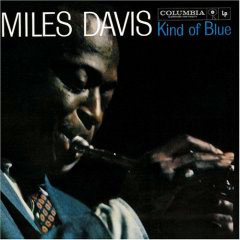
Kind of Blue - Miles Davis

Kind of Blue - Miles Davis
How many times have we been subjected to remake after unmemorable remake of the tunes on Kind of Blue? Most readings of these songs are largely forgettable, especially when held up alongside the originals - seems Miles and his subsequent groups were the only ones that consistently did these pieces justice. This said, it goes without saying that this album was, still is and will always be an indispensable cornerstone of any jazz collection - one of those records I'd venture to say "If you could only have one jazz CD, make sure it's..."

What really makes it hold up as a timeless classic is the all-around stellar playing of the group, no doubt in part inspired by Miles' selection of material: His "introduction" of modal harmonic structures in these pieces, and the fresh ideas the material elicited in the quintet's playing. The most oft-cited piece in this regard is the (in)famous So What, for obvious reasons. We all know this became a Trane standard as Impressions - and a blazing uptempo romp for the 60s Miles quintets - and was recycled as a number of other tunes by other groups. So What is one of the quintessential tunes in every aspiring jazz player's book (required reading for Jazz 101, that only gets more enigmatic and challenging for PhD's - hence the myriad half-assed versions of this song that have been recorded and played of the years).

Interestingly, it's always struck me that the other really "modal" piece on the record is largely overlooked and underplayed (though that may be a blessing in disguise). To me, Flamenco Sketches allows the group to stretch out even more and really immerse themselves in modal improvisations. The solos are a bit more raw and vulnerable - without as steady a pulse, momentum is generated more by the line of the soloist's melody that the rhythm section - there's a uncommonly delicate, fragile beauty to both Miles and Coltrane's solos. While so much 60s Trane has been traced back to So What, in Flamenco Sketches I hear early strains of that more elusive, haunting quality that reappears later in Expression and pieces like Wise One, Crescent, Meditations, etc.

Cannonball's playing on Flamenco is equally intriguing - imbued with a ecstatic yet poignant drive, it almost captures the joyous energy of his later Live at The Club classics, but in the more subdued context of this recording. Evans seems in his element here - if anyone's later work can be traced back to anything on Kind of Blue, the moods and colors Evans creates on Sketches seem most evocative of the shape of things to come...

Of course, I'm as guilty as the next guy with regards to having committed countless crimes in the name of So What - dunno how many times I've played it, but do know of only a few where I've even come close to really playing it. A recent listen to Kind of Blue rekindled my interest in Flamenco Sketches, and have been delightedly working on the tune ever since. Best part is: Flamenco feels fresh. Every time I play through it, the tune's full of new possibilities and surprises. Maybe that's more of how the group was hearing things back in '59. Whatever the case, the sextet's version still sounds fresh as ever - and I have renewed faith that these songs are far from played out. Avante-garde is more a state of mind, not a sound at a particular place in time...

Kind of Blue (Columbia CL 1355)
March 2 & April 6, 1959
Columbia 30th Street Studios, NYC