Showing posts sorted by relevance for query coltrane. Sort by date Show all posts

Coltrane - John Coltrane Quartet

Coltrane - John Coltrane Quartet
Apty titled, Soul Eyes is full of soul, a window into the lovely, delicate, melancholy & complex soul of the Coltrane Quartet. statement of the melody on this track really captures the sophisticated romanticism that seems the essence of this Dameron ballad - while subsequent solo brims with a quiet, subtle joyousness, sparkling from the outset with crisp, articulated runs - uplifting in their buoyancy. Trane's solo begins briskly, interspersing restrained longer singing wails, punctuated with dense flourishes and his signature fragmented motifs. All seamlessly float atop the tune's complex changes, with the quartet gracefully dropping back into legato for the closing statement of the melody. Soul Eyes is not just a rare and wonderful interpretation of a an obscure Tadd Dameron treasure, but also a captivating glimpse into the Coltrane Quartet's masterful powers, specifically their artistry with ballads and chord changes - something not as extensively documented as their recordings of modal material during this period.

Not everyone - perhaps not anyone else - can take an almost absurdly mundane and trite little ditty like Inchworm and infuse it with the staggering, apocalyptic beauty that Trane did. Soaring off into the upper reaches of his soprano even during break that punctuates his initial statements of the melody, Trane by turns wails, sings, and cries through this tune all the while unleashing the floodgates of a strangely beautific cosmic angst that surfaces often his work of this period. Sort of an aesthetic oxymoron: a paradoxical interweaving of joy and grief, at once celebratory shouting and a cry of despair, yin and yang, light and dark... This piece stills sends chills up my spine - decades after the first listening - not just Trane's magnificent solo, but little details like his series of trills during and after his last statements of the melody, the pulling back of the whole Quartet during the melody, and Trane's final word, his harmonically dazzling cadenza at the end, spiralling off into a stark tonality before careening back to resolution...

Coltrane (Impulse A 21)
Rudy Van Gelder Studio, Englewood Cliffs, NJ
April 11; June 19, 20, 29 1962

Thelonious Monk Quartet with John Coltrane at Carnegie Hall

Monk & Trane at Carnegie Hall
Being a devotee of classic jazz, it's not often that I find myself on the edge of my seat with anticipation of a new release. Such momentous events as the the coming to light of a rarity like this & Trane set doesn't happen every day - come to think of it, I still remember getting fired up when the Five Spot recordings surfaced. Though the music on from the Five Spot recordings was electrifying, the fidelity of the recordings themselves left a bit to be desired. No so with The Thelonious Monk Quartet at Carnegie Hall CD - this is the next best thing to studio quality (bass is a little weak, and drums a bit loud and boomy at times - these being rather realistic characteristics of the Hall though).

"Early Show"
Whatever the case, the music recorded that night in '57 is as magical today as it was then. Monk's Mood here is played here with an incredible poignancy: Thelonious' solo intro chorus shows the pianist at the height of his powers, manipulating time and harmony brilliantly. Trane comes in with his statement of the melody after a breathtaking duet of cascading, fluid, intertwining lines exchanged with Monk - then the two proceed through staggeringly beautiful interpretation of the melody. Time is elastic, yet the pulse remains firmly implied as Monk & Trane (and ) continue to reiterate the melody, embellishing it with ever-more dazzling interplays of runs with each successive chorus. Always one of my favorite Monk tunes, this version stands out amongst recordings I've heard - Monk & Trane are truly playing as one here, completely inside the tune, inside the moment, inside each other's ideas. This piece alone is worth the price of admission: One of the most beautiful pieces of music one could ever hope to hear.

This of course, is just the beginning. After the transcendent, cathartic, timeless moments of Monk's Mood, the quartet launches into Evidence. After a few choruses, Trane is up to speed, "sheets of sound" unfurling effortlessly, pushing the progression ahead with a gloriously relentless inevitability. A deceptively simple (or seemingly standard) A section of the progression is transformed by Coltrane into stunning, brilliant architecture of arpeggios and dizzying runs. Monk delivers a what can only be described as a perfectly Monkish solo: an idiom unto himself, he fully exploits his singular vocabulary here. Trane's subtle (almost tentative?) return with the melody finds Monk setting up a great, funky offbeat accompaniment - comping in between the accents of the melody, maximizing the angularity and propulsive nature of the line.

We're treated to some more unaccompanied Monk for the first chorus of Crepuscle With Nellie (wouldn't want it any other way). Coltrane enters with the rhythm section, languidly stating the melody in unison with Monk, Thelonious interjecting the occasional, ideally timed cluster comps that leap up from the mix, jagged accents in the otherwise still soundscape of the piece.

Nutty abruptly changes the mood - making his presence known with some well-placed accents (a la famous "bombs") - and Trane barging in for a few searing choruses leading up to Monk's spartan solo, lines of fragile, delicate beauty that never stray far from the melody. The theme reemerges effortlessly and the quartet wraps up this succinct (and comparatively "sane") version of Nutty before the closing number of the "Early Show."

& set up a sizzling polyrhythmic groove against the melody of Epistrophy, as Monk & Trane state the melody together. This tune seems tailor-made for Trane - the progression ideally suited for his harmonic explorations and spiraling patterns. Thelonious again juxtaposes the roiling density of Trane's closing solo statements with a sparse entrance. Monk takes a brief solo punctuated with a few deftly placed careening runs, before the group cooks their way through the closing melody.

"Late Show"
...coming soon...


The Thelonious Monk Quartet at Carnegie Hall (Blue Note 0946)
Carnegie Hall, NYC
November 29, 1957


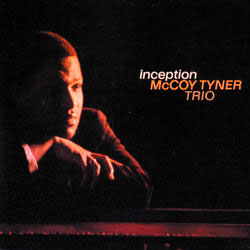
Inception - McCoy Tyner

Inception - McCoy Tyner
From the first solo chorus McCoy rips into on the title track Inception, it's clear that this record will be a tour de force by a pianist at the height of his powers. Building up to the fours exchanges with Elvin (lead into by a subtly polytonal ascending chordal line), McCoy unwinds an increasingly intricate series of lines, showcasing his technical prowess and harmonic insight.

There is No Greater Love features some great interplay with bassist in the melody, as Art alternates between a cleverly staggered/delayed statement of the line that resolves to a unison with McCoy. McCoy's solo on this piece is less modal than that of Inception - he exploits the changes more, while still retaining the flavor of his work with concurrent to this record. delivers masterful brushwork throughout - allowing Tyner to shine, Jones keeps his characteristic, highly propulsive accompaniment at just the right level not be intrusive, but quite sufficient to make it's presence known (the it seems safe to suspect that Jones was deliberately recorded "down" in the mix, judging from live recordings and firsthand accounts of Trane's group at this time).

Perhaps most reminiscent of Coltrane Quartet playing of this period, Blues For Gwen cooks along nicely throughout - not a standout, but another textbook example of Tyner's style at the time.

Art's use of arco on Sunset goes well with Tyner's more rhapsodic voicings and runs to create a an interlude of real grandeur, really changing the pace for this number. Lapses in and out of an explicitly pulse and more legato sections make for an enthralling interpretation of the melody - literally evocative of a stunning sunset. Elvin remains all but inaudible - even through the piano solo - easing in for part of the theme at the end before Tyner and Davis shift back to their looser tempo as a duet to close. In all, a refreshing take on a classic tune - an interpretation that really seems to get at the essence of the tune, something missed by many lesser artists, who merely read a song, even if it is to deliver dazzling (albeit not necessarily so relevant) solos. Just goes to show the power of orchestration and arrangement, devices made even more potent in a trio setting (like this one) that know how make the most of it.

For Effendi McCoy digs in for a smokin' mid-tempo romp on a tune that's an ideal launching point for some signature modal explorations. The melody is tailor-made for Tyner, neatly symmetrical patterns/motifs in the left hand (in unison with Davis) alternating with melodic chordal statements. Built on an interesting twist of the Impressions/So What progression (ABA), the group make the piece sound natural and right (i.e. not as if there's 8 bars missing). Again evidencing their mastery: Getting inside the tune, and playing to it's fullest.

Beginning with a an ostinato bass riff and Elvin's signature polyrhythmic latin pulse, Speak Low is a (not exactly understated) showcase of the trio in full form, Tyner streaming out meticulously constructed lines of brilliant harmonic detail - at once modal-sounding and simultaneously riding and substituting the changes. This tune is taken at a perfect tempo, up enough that it cooks along, rolling forward as if by it's own momentum. Elvin nuances the pulse, creating an ahead of the beat impression, adding to this sense of propulsion.

As the name implies, Inception was Tyner's debut recording effort as a leader. Without question, the record is a testament to the notion that there's nothing wrong with waiting til you're ready. Inception is largely a showcase for Tyner, and as such provides a wonderful documentation of his playing during this period, in particular his playing outside of the Coltrane Quartet. With inception, we're treated to some insights as to McCoy's individual aesthetic, with his modal vocabulary being applied to more standard tunes/progressions. Definitely essential listening for Tyner fans and Trane Quartet devotees.

Inception (Impulse A 18)
Rudy Van Gelder Studio, Englewood Cliffs, NJ
January 10 & 11, 1962

The Real McCoy - McCoy Tyner

Passion Dance
After the exquisite, deftly constructed melody statement of the tune's head, opening solo is a tour de force, and a study in Tyner's unique vocabulary of the late sixties (often imitated, never duplicated, as the saying goes): the dazzling, crystalline runs, the brilliant harmonic permutations, and (of course) the signature voicings. Not dissimilar to much of his late work with the quartet - it's very reminiscent of his playing on - it's great to hear on this recording, on which McCoy doesn't seem to be really straining to rise above the volume or density. bass seems to add a bit of extra buoyancy to the groove, keeping the tune swinging along without the full measure of freight train intensity of the Coltrane quartet.

solo is truly inspired, making great use of multiphonics and deft modulations in his fragmented pattern runs. It's a succinct solo that's clearly standing in the long shadow of (which had been evident in Henderson's playing prior to this date). As the tunes fades out, Joe really lets go with some upper register, spiraling lines while McCoy hammers out intricate lines of his own simultaneously. A perfect end to a timeless tune, that leaves one feeling it hasn't really ended, but continues on eternally - and that you've just experienced a glimpse through Tyner & Co's astute vision into the beautiful dreamscape of a cosmic dance.

(Blue Note BLP 4264)
Rudy Van Gelder Studio, Englewood Cliffs, NJ, April 21, 1967

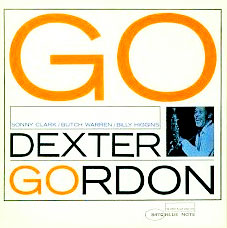
Go - Dexter Gordon

Go - Dexter Gordon
Right from and ' entrance over descending bass line on Cheese Cake, this album lives up to its name, and goes. Dexter wades right into his solo with a self-assured and confidence that leaves no question that this is going to be smokin set. His tone is expansive and majestic throughout - follows with a brief, terse and somewhat restrained post-boppish, post- solo before comes sailing back in for a few choruses, keeping the energy of the piece intact. It's easy to hear from the broad, rich tone plays with why is considered one of influences - check out the higher register wails works in.

The ballad that follows - I Guess I'll Hang My Tears Out To Dry - again seems reminiscent of . Like Soul Eyes, (perhaps somewhat inexplicably for myself - and myself alone) it vividly conjures up the image/sensation of a late night cab ride in NYC - say, speeding uptown on Lexington in the pouring rain on one of those first fall nights, when that first chill cuts through the damp air, yet the insular environs of that cab's back seat hold the cold at bay, and the city streams by serenely in a watery blur of bending light and shadow... Such obtuse imagery and metaphor aside, rich tone overflows from this tune, drawing the listener in, immersing you in a curious ennui...

The more rollicking Second Balcony Jump changes the pace to more of a straight-up, joyous blowing session. nimbly timekeeping keeps a slightly loose pulse - creating an infectious swing on this tune. draws us into the groove further with the latin intro on Love For Sale. Dexter's statement of the melody - and his soaring, caterwauling, singing solo that follow conspire to make this perhaps my favorite recording of this piece. sounds at once majestic and sarcastic: injecting wry turns of phrase into lines that evoke a sense of grandeur that transcends the tune itself. His mariachi-esque entrance after solo soon gives way to brilliant ascending arpeggios nearly spanning the range of the horn, replete with fat, bulbous low register honks (again bringing to mind playing of this period) to keening, almost vocal upper-register wails.

Where Are You brings me back to those autumnal, rain-slicked city streets, with Dexter again conjuring a sense of a kind of regal loneliness - that incomparable realization of aloneness that the city can evoke at times...

Announcing its arrival with a quote from ' classic If I Were A Bell, Three In The Morning is another mid tempo number that shines on: Asserting his cool, confident mastery of the instrument and the idiom. As described Dexter's style of dress - "cleaner than a broke-dick dog" - this tune (an otherwise typical, forgettable hard-bop vehicle) is transformed at Gordon's hands into something with much more class - again, transcendent. One only need listen to Clarke's perfectly adroit and idiomatic solo in contrast to Gordon's playing, and Dexter's greatness is evident. Once more, Gordon enters after Sonny's solo with a tongue-in-cheek quote from Take Me Out To The Ballgame - almost trivializing Clarke's solo. Not to undermine Sonny - he's one of my favorite pianists of this period and style - just that the clarity of Dexter's inspiration on this date is in such a league of its own, rather overshadowing the playing of the rest of the band. From the perspective of being "Dexter's band," however, their performance is stellar all around. Completely supportive as a rhythm section, they lay down an infallible groove throughout, and deliver a few more modest solos that set off Gordon's work as all the more dazzling - solos that in other contexts that in their own right are nothing to be scoffed at.

What's important here, is that Go! is clearly a Dexter Gordon album - a wonderful documentation of a man playing at the height of his powers. Go! is definitely one that should be on the short list for any fan of hard-bop, 60s jazz - or for that matter, anybody with ears.

Go! (Blue Note - BLP 4112)
Rudy Van Gelder Studio, Englewood Cliffs, NJ
August 27, 1962

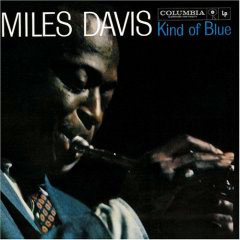
Kind of Blue - Miles Davis

Kind of Blue - Miles Davis
How many times have we been subjected to remake after unmemorable remake of the tunes on Kind of Blue? Most readings of these songs are largely forgettable, especially when held up alongside the originals - seems Miles and his subsequent groups were the only ones that consistently did these pieces justice. This said, it goes without saying that this album was, still is and will always be an indispensable cornerstone of any jazz collection - one of those records I'd venture to say "If you could only have one jazz CD, make sure it's..."

What really makes it hold up as a timeless classic is the all-around stellar playing of the group, no doubt in part inspired by Miles' selection of material: His "introduction" of modal harmonic structures in these pieces, and the fresh ideas the material elicited in the quintet's playing. The most oft-cited piece in this regard is the (in)famous So What, for obvious reasons. We all know this became a Trane standard as Impressions - and a blazing uptempo romp for the 60s Miles quintets - and was recycled as a number of other tunes by other groups. So What is one of the quintessential tunes in every aspiring jazz player's book (required reading for Jazz 101, that only gets more enigmatic and challenging for PhD's - hence the myriad half-assed versions of this song that have been recorded and played of the years).

Interestingly, it's always struck me that the other really "modal" piece on the record is largely overlooked and underplayed (though that may be a blessing in disguise). To me, Flamenco Sketches allows the group to stretch out even more and really immerse themselves in modal improvisations. The solos are a bit more raw and vulnerable - without as steady a pulse, momentum is generated more by the line of the soloist's melody that the rhythm section - there's a uncommonly delicate, fragile beauty to both Miles and Coltrane's solos. While so much 60s Trane has been traced back to So What, in Flamenco Sketches I hear early strains of that more elusive, haunting quality that reappears later in Expression and pieces like Wise One, Crescent, Meditations, etc.

Cannonball's playing on Flamenco is equally intriguing - imbued with a ecstatic yet poignant drive, it almost captures the joyous energy of his later Live at The Club classics, but in the more subdued context of this recording. Evans seems in his element here - if anyone's later work can be traced back to anything on Kind of Blue, the moods and colors Evans creates on Sketches seem most evocative of the shape of things to come...

Of course, I'm as guilty as the next guy with regards to having committed countless crimes in the name of So What - dunno how many times I've played it, but do know of only a few where I've even come close to really playing it. A recent listen to Kind of Blue rekindled my interest in Flamenco Sketches, and have been delightedly working on the tune ever since. Best part is: Flamenco feels fresh. Every time I play through it, the tune's full of new possibilities and surprises. Maybe that's more of how the group was hearing things back in '59. Whatever the case, the sextet's version still sounds fresh as ever - and I have renewed faith that these songs are far from played out. Avante-garde is more a state of mind, not a sound at a particular place in time...

Kind of Blue (Columbia CL 1355)
March 2 & April 6, 1959
Columbia 30th Street Studios, NYC


Ain't It Funky Now

One of the oft-overlooked facets of funk is the need to "keep it in the pocket." James Brown (the JB's for that matter) really had this down - just holding a groove solid behind a soloist. Not getting louder or more dense as the solo builds. Not following every little ebb and flow. A lot of classic hard bop (even early bebop) rolls this way too - the rhythm section just hunkers down, cookin' along, leaving the bulk of the embellishments and dynamic/density variations to the soloist and the drummers' fills. And I'll tell you: As a soloist, this can be a really liberating situation, and also, one that's not as common as one might expect. Many sidemen feel the need to (over)react to everything the soloist does - so much so, that they're practically soling themselves. Chalk it up to misinterpretation of the Coltrane quartet, Ornette, free jazz, and collateral damage from the Berklee grad pyrotechnics and the "jam band" mentalities - everyone blowing all their chops all at once, all the time.


On 1970's "Green is Beautiful" Grant and company provide a study in how not to succumb to this unfunky fate of being "out of the pocket." The organist Emmanuel Riggins hangs tenaciously on the vamp, along with Jimmy Lewis keepin' it on the one with the electric bass. Percussionists Candido Camero and Richie "Pablo" Landrum sit tight in the groove as well - it's really only drummer Idris Muhammad that steps it out a bit withe soloists. Muhammad's playing really kicks it - striking me at times as an Elvin Jones type of approach to funk - visceral, raw and undeniably propulsive. Even under Blue Mitchell, Claude Bartee and Riggins' solos, Grant himself schools us on how to hold it down, sticking to a percussive octave and chordal pattern to punctuate the groove.

Green's soloing here is of course the standout here. His blues-inflected riffing, gradually developing a phrase or motif as a theme is really in fine form. He never needs to resort to any dazzling runs or complex harmonic machinations to maintain interest - instead Grant just patiently spins out phrase after phrase, developing his ideas with what seems like an inexorable logic and economy. Moreover, his timing, accents and placements keep it funky. While he doesn't use space nearly as much, his time evokes Miles in the sense of dropping the note (or phrase) right where it needs to land. Perhaps the essence of funk, right there.

Ain't It Funky Now
Grant Green - Green Is Beautiful (Blue Note BST 84342)
January 30, 1970